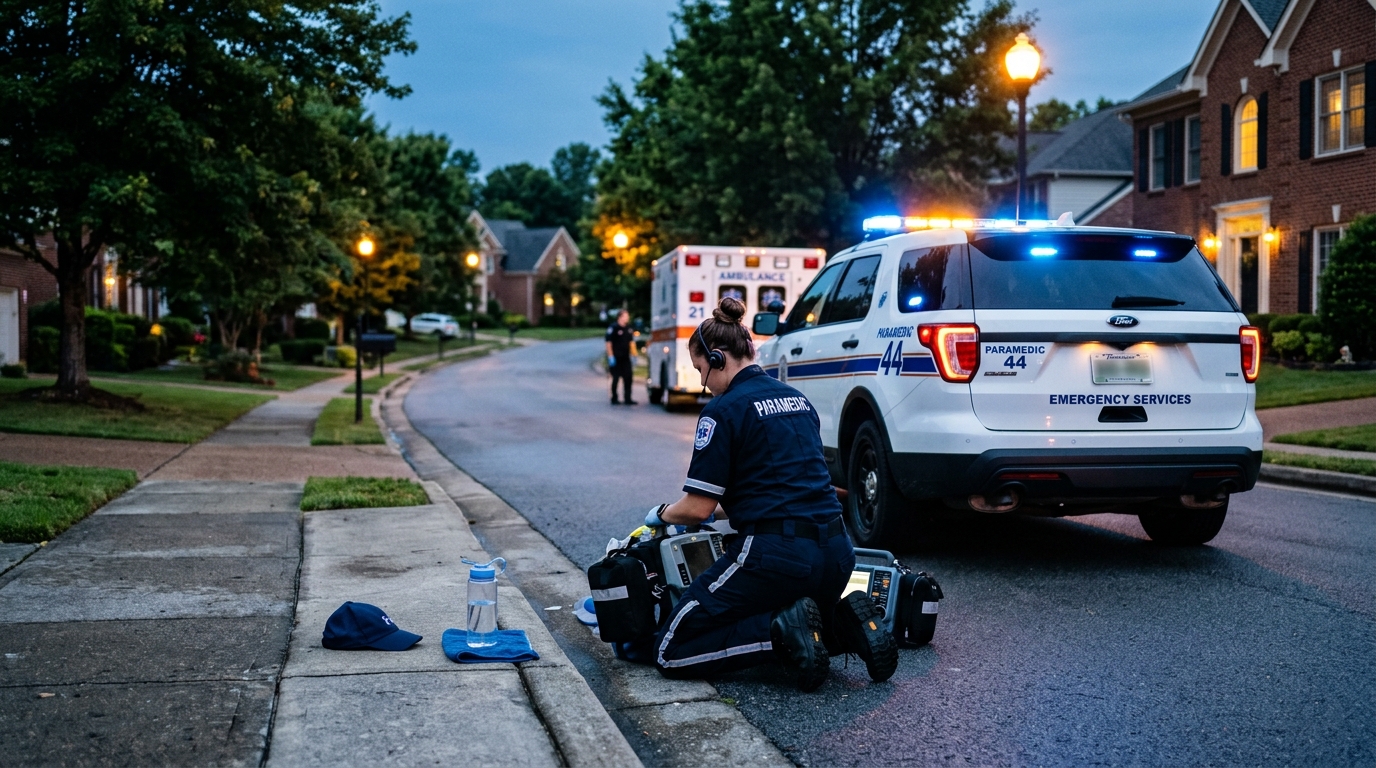

One second you’re crossing the street, jogging the same loop you’ve run a hundred times, or walking back to your car after dinner. The next second a vehicle is stopping in the wrong place, you’re on the ground, and a stranger is asking if you’re okay.
Pedestrian crashes are uniquely disorienting. There’s no airbag, no seat belt, no metal cage between you and a multi-thousand-pound vehicle. Even at low speeds, the injuries can be serious. And in the first few minutes, the adrenaline is so loud that it’s easy to make decisions you’ll later regret.
If you’ve just been hit — or you’re reading this for someone you love who was — here is what we tell our Tennessee clients to do, in roughly the order it matters.
Take the First Hour Seriously
The most important thing in the first hour after a pedestrian crash is not the claim. It’s you. But the claim is being created in real time whether you focus on it or not, so here’s what to do at the same time you’re taking care of yourself:
- Call 911. Always. Even if the driver is apologetic and offering to “just exchange info.” A crash report is one of the most important documents in any pedestrian case, and you only get one chance to have police respond to the scene.
- Stay where you are if it’s safe. Don’t try to walk it off down the road. Adrenaline hides injuries. If the scene isn’t safe (active traffic, dark roadway), move only as far as you need to.
- Photograph everything. The vehicle, the license plate, your position relative to the crosswalk or curb, skid marks, debris, the lighting, your clothing, any visible injuries. Photos taken at the scene are worth ten times what photos taken the next day are worth.
- Get the driver’s information. Name, phone number, insurance company, policy number, and a photo of their driver’s license and insurance card. Don’t assume the police will hand this to you — sometimes they do, sometimes they don’t.
- Identify witnesses. Anyone who stopped, anyone in a parked car, anyone walking by. Names and phone numbers. Witnesses leave fast.
Get Checked Out — Even If You “Feel Fine”
This is the single piece of advice we repeat the most, because it’s the one that costs people the most money and pain when they ignore it.
Adrenaline can mask the symptoms of a head injury, internal bleeding, soft-tissue damage, and fractures for hours or even days. The “I’m fine, I just need to sit down” feeling at the scene is not a medical exam. By the next morning — or sometimes a week later — that feeling is gone, replaced by something much worse.
There is also a claims-side reason to get checked out promptly: insurance companies treat gaps in treatment as evidence that you weren’t really hurt. If you wait three weeks before seeing anyone, the adjuster will argue that whatever injury you eventually treat must have come from something else. We’ve written about this in detail in our February 2026 series on hidden injuries and on how insurers use treatment gaps.
Get evaluated. Document everything. If something hurts later, follow up. The medical record you build in the first month is the spine of any later claim.
Insurance: Whose Coverage Pays What
Pedestrian cases involve more layers of coverage than most people expect. The big ones to know:
- The at-fault driver’s bodily injury liability coverage. This is the primary source of compensation in most pedestrian cases. Tennessee requires drivers to carry minimum liability insurance, but minimum limits often aren’t enough for a serious injury.
- Medical payments coverage (MedPay) on your own auto policy. Yes — your own auto policy can cover you as a pedestrian, even when no car of yours was involved. MedPay pays out regardless of fault, usually up to a few thousand dollars. Many people never know they have it.
- Uninsured/underinsured motorist coverage (UM/UIM). If the driver who hit you is uninsured or underinsured, your own UM/UIM coverage may step in. Like MedPay, this can apply when you’re walking, not just when you’re driving.
- Health insurance. Your health insurer will usually pay your bills up front, then assert a “subrogation” claim against any settlement you eventually recover. How that gets handled is one of the things a Tennessee injury attorney negotiates on your behalf.
The order in which these policies pay, and how to coordinate them so you’re not leaving money on the table, is genuinely complicated. It’s one of the main reasons people in pedestrian cases benefit from talking to a lawyer early.
The Defenses You Should Expect
If your claim is significant, the at-fault driver’s insurer is going to look hard for ways to shift fault to you. The most common arguments:
- “You were jaywalking.” As we explained in the first post in this series, every intersection has a crosswalk under Tennessee law, even when no paint is on the ground. And even when a pedestrian is technically out of position, the driver still has a duty of due care under Tenn. Code Ann. § 55-8-136.
- “You were on your phone / wearing earbuds / not paying attention.” Insurers often imply that pedestrian distraction is the same as driver distraction. It isn’t, legally — and the burden is still on the driver to avoid hitting people in the roadway.
- “You stepped off the curb without warning.” This argument relies on the “so close that it is impossible to yield” standard, which is much narrower than insurers pretend.
- “You were wearing dark clothing.” Reflective gear is smart, but it isn’t legally required for a pedestrian on a sidewalk or in a crosswalk.
How those defenses interact with Tennessee’s modified comparative fault rule is the subject of our November 2025 series on fault and recovery. The short version: a partial share of fault doesn’t bar your claim — it reduces it, and only up to a point.
Don’t Do These Things
A few mistakes can quietly damage a strong case:
- Don’t give a recorded statement to the at-fault driver’s insurance. They’re not calling to help you. Politely decline until you’ve spoken with an attorney.
- Don’t sign a medical release the at-fault insurer sends you. They’ll use it to comb through unrelated records.
- Don’t post on social media. A photo of you smiling at a family event two weeks after the crash is going to end up in the adjuster’s file.
- Don’t accept a fast settlement check. Quick offers in pedestrian cases are almost always far less than the case is worth, and signing a release is final.
We’re Here to Help
If you or a loved one was struck while walking, running, or jogging in Tennessee, the next steps you take will shape the rest of the claim. We can help you make them in the right order.
Call 615-244-2111 or reach out through our online contact form.
Because we care,
Stillman & Friedland