
When Tennesseans think about distracted driving, they usually think about phones. That makes sense — cell phones are the most visible, most regulated, and most talked-about form of distraction on our roads. But if you only think about phones, you miss a huge slice of how crashes actually happen.
Plenty of distracted-driving wrecks in Tennessee don’t involve a phone at all. The driver was eating. Their kids were arguing. They were wrestling with a GPS screen. They reached for a dropped water bottle. They were furious about something that happened five minutes ago and weren’t really “there” behind the wheel.
This last post in our April series looks at the non-phone distractions that quietly cause Tennessee wrecks every day — and at why they can still be the basis of a strong injury claim, even though the Hands-Free Law doesn’t specifically mention them.
Eating and Drinking Behind the Wheel
Food in the driver’s seat is so normal in American driving culture that most people don’t think of it as distraction. It is. Eating a burger requires at least one hand off the wheel, eyes occasionally off the road, and attention spent on not dripping sauce on your lap instead of on the car in front of you.
Tennessee’s commuter corridors are lined with fast-food drive-thrus for a reason, and the risk is compounded at exactly the time of day when drivers are hungriest, most tired, and least patient. A sudden brake check on I-40 while you’re halfway through unwrapping a sandwich is not a recipe for a good reaction time.
Passenger Distraction — Especially for Young Drivers
Adults rarely think of a conversation as “distraction.” But a heated exchange, a crying baby, a dog climbing between seats, or children arguing in the back is cognitively demanding. Your brain is trying to do two things — drive, and manage the situation inside the car — and neither gets your full attention.
This is a particular concern for teen drivers. Tennessee’s Graduated Driver License (GDL) program, administered by the Tennessee Department of Safety & Homeland Security, places specific restrictions on young drivers, including limits on the number of non-family passengers in the vehicle during the intermediate license phase. The reason is simple: research has consistently shown that crash risk for young drivers goes up sharply with each additional young passenger.
Passenger distraction is also one of the harder categories for insurance adjusters to dismiss, because witnesses and other occupants of the car can directly describe what was happening in the cabin just before a crash.
GPS, Infotainment, and In-Dash Screens
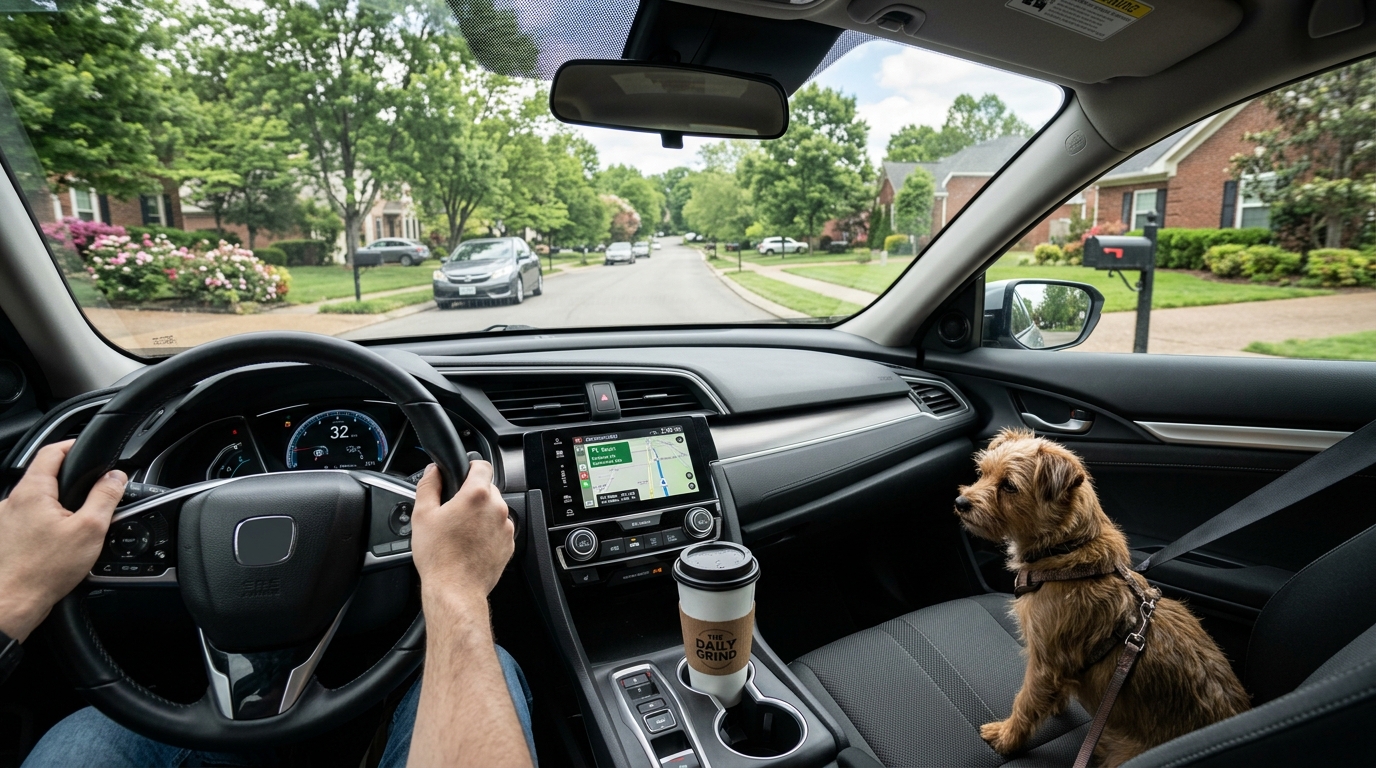
Here’s a tension that doesn’t get talked about enough: Tennessee’s Hands-Free Law bans holding a phone, but it does not ban in-dash touchscreens. And yet many of those built-in screens require more attention than a phone does — deeper menus, smaller text, and more fiddling to change a song or re-route a trip.
Using a vehicle’s built-in navigation is legal. It can also still cause a crash. The same NHTSA eyes-off-road math that applies to a phone glance applies to a dashboard glance. If you’re four menus deep trying to pair a Bluetooth device while merging onto I-24, you are distracted, full stop.
From a civil-injury perspective, the fact that a distraction was “legal” does not shield a driver from a negligence claim. Tennessee law still expects all drivers to keep a proper lookout and maintain reasonable control of the vehicle. A driver who causes a wreck because they were mashing buttons on their infotainment system can still be found negligent — even if no Hands-Free Law citation is possible.
Pets in the Vehicle
Unsecured pets are a real and underappreciated source of distraction. A dog climbing into a driver’s lap, a cat squeezing under the brake pedal, or a bird cage sliding across the back seat can turn a routine drive into an emergency in seconds.
Pet owners rarely think of their animals as a hazard, which is exactly why it catches them off guard. Many veterinary and humane organizations, along with NHTSA, recommend securing pets with a harness, carrier, or crate for the same reasons seat belts exist for humans.
Personal Grooming and “Getting Ready in the Car”
A surprising number of Tennessee crashes involve drivers who were:
- Applying makeup or mascara (especially at red lights and stop signs)
- Shaving
- Adjusting contact lenses
- Styling or combing hair
- Checking themselves in the rearview mirror for extended moments
None of these require a phone, and none of them are illegal per se. All of them pull attention and at least one hand away from the actual job of driving. When one of these drivers causes a crash, the “I was late for work” explanation doesn’t reduce what they owe the person they hit.
Reaching, Dropping, and Retrieving
This may be the single most common non-phone cause of sudden distracted-driving crashes: the driver who reaches for something.
- A dropped water bottle rolling under the brake pedal
- A kid’s toy just out of reach in the back seat
- A wallet that slid off the passenger seat
- A cup of coffee about to spill
- A purse, bag, or backpack on the floor of the passenger side
The physical act of reaching across the cabin — especially if it means leaning down or twisting — takes the driver’s eyes and body out of the driving position. Many Tennessee single-vehicle wrecks, lane departures, and off-road crashes trace back to exactly this kind of moment.
Emotional Distraction
This one is harder to prove, but it’s very real. A driver in the middle of a bad day, a family argument, a financial panic, or a grief reaction is cognitively impaired in a way no breathalyzer can detect. They may stare at the road without truly seeing it. Their reactions may be a fraction of a second slower than usual. Their judgment — when to brake, when to change lanes, when to yield — may be off.
Tennessee law doesn’t criminalize “driving while upset.” But a driver whose emotional state caused them to blow through a stop sign or drift into oncoming traffic is still responsible for the crash they caused.
Non-Phone Distraction Is Still Negligence
Here is the most important legal point for injured Tennesseans to understand: the absence of a Hands-Free Law violation does not mean the other driver is off the hook.
Tennessee law requires every driver to exercise reasonable care — to keep a proper lookout, to maintain control of the vehicle, and to drive in a way that doesn’t put others at unreasonable risk. A driver who fails to do any of that, for any reason, can be found negligent under Tennessee’s comparative fault rules.
And because many non-phone distractions cause the same kinds of hidden injuries as any other wreck, the path forward for an injured victim looks very similar: get medical attention, document everything, and talk to an attorney before the other driver’s insurance company talks you into settling too early.
We’re Here to Help
If you or a loved one was hurt by a driver who wasn’t paying attention — whether their eyes were on a phone, on a burger, on a GPS screen, or nowhere in particular — you still have rights. We can help you figure out what happened and what your options are.
Call 615-244-2111 or reach out through our online contact form.
Because we care,
Stillman & Friedland