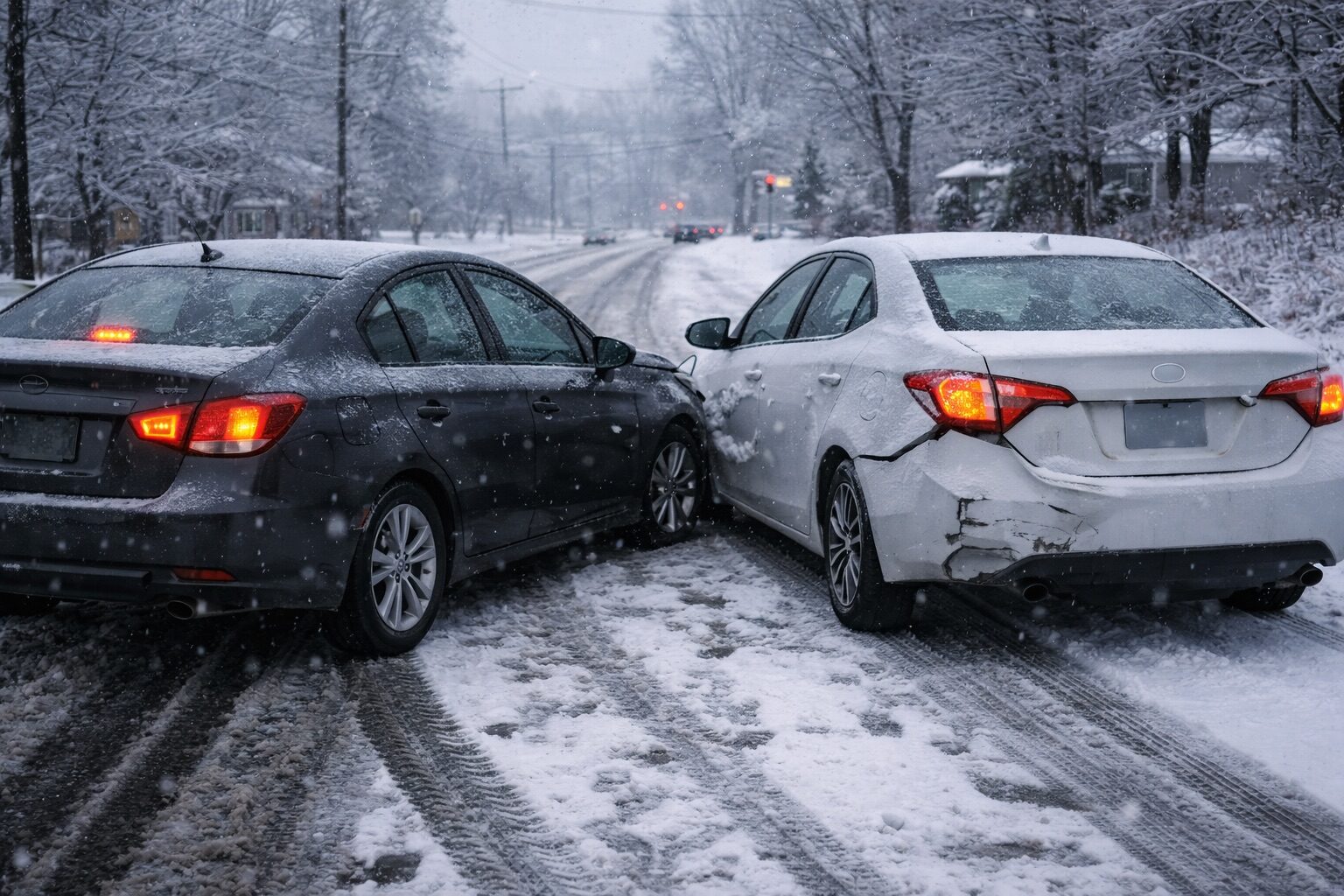

After a low‑speed winter fender‑bender, it’s common to hear, “Let’s just forget it — it’s just the ice,” or “We don’t need to involve insurance.” Many people worry they’ll be “making a big deal out of nothing.”
But even seemingly minor crashes on slick Tennessee roads can cause real injuries and expensive hidden damage. This post explains why reporting and documenting these crashes can protect you.
Why “Minor” Winter Crashes Can Still Cause Serious Problems
When people say a crash was “minor,” they’re usually talking about speed or visible vehicle damage. But your body doesn’t measure a collision that way.
Even low-speed impacts can cause injuries like:
- Neck and back strain (often described as whiplash-type injuries)
- Shoulder, wrist, and knee injuries from bracing against the steering wheel or dashboard
- Head symptoms like headache, dizziness, or nausea—especially if your head snapped back or hit the headrest
- Flare-ups of pre-existing conditions that suddenly become painful again
In winter, symptoms are often delayed for practical reasons:
- Adrenaline and shock can mask pain for hours.
- Cold weather can make muscles feel stiff and “normal sore,” so people dismiss warning signs.
- Holiday schedules and weather delays can keep people from getting checked out quickly.
If you notice worsening pain, numbness/tingling, or any signs of a head injury, getting medical care isn’t “making a big deal.” It’s taking care of yourself—and creating a clear record of what you’re experiencing.
Tennessee Rules on Reporting Crashes
People often feel pressure at the scene to “just exchange numbers” and move on—especially when it’s cold, traffic is backing up, and everyone wants to get home.
But having a documented record of what happened can make a major difference later, particularly if:
- Pain shows up the next day
- A repair shop finds hidden damage
- The other driver changes their story
- An insurer argues the crash “wasn’t serious enough” to cause injury
If anyone is injured, if vehicles can’t be moved safely, or if the situation feels uncertain, calling law enforcement is usually the safest choice. Even when police don’t respond (which can happen during widespread winter events), you can still protect yourself by documenting the scene and promptly reporting the crash to the appropriate parties.
If you need a copy of a Tennessee crash report, the Tennessee Department of Safety & Homeland Security explains how to obtain one here: https://www.tn.gov/safety/tnhp/crashreport.html.
Hidden Vehicle Damage After a Winter Fender‑Bender
Modern vehicles are designed to “look fine” after a small impact—especially when the damage is behind a plastic bumper cover. But winter fender‑benders can still cause expensive issues, including:
- Bumper reinforcement and absorber damage hidden behind an intact bumper cover
- Alignment problems that show up days later (pulling, uneven tire wear, vibration)
- Radiator, cooling, or sensor damage from a seemingly small hit in the front
- Trunk liftgate misalignment that leads to water intrusion
- Advanced safety system issues (backup cameras, parking sensors, blind-spot and collision systems) that require calibration after repairs
If the crash happened on ice, the angle of impact can also be unusual—side swipes, glancing blows, or a low-speed slide into a curb can create suspension and wheel damage that isn’t obvious until you drive again.
A practical tip: take photos of the damage immediately, but also take a few photos again in daylight. What looks “minor” under a streetlight can look very different the next morning.
Balancing Insurance Concerns with Protecting Your Rights
It’s understandable to worry about insurance premiums after a small crash. Many people are trying to do the “polite” thing and avoid making waves.
But here’s the risk: once you decide to handle a crash informally, you may be stuck if new problems appear. That can include:
- Neck/back pain that doesn’t resolve (and leads to imaging, therapy, or specialist care)
- A repair estimate that grows after a shop removes the bumper cover
- Lost work time because soreness or headaches make your job difficult
If the other driver promises, “I’ll pay for it,” consider these guardrails:
- Don’t accept cash and then sign anything you don’t understand.
- Be cautious about “release” language; it can close the door on future claims.
- Keep everything in writing (texts/emails) and save receipts and estimates.
If you do involve insurance, the best approach is usually straightforward documentation. Stick to facts about what happened and how you’re feeling, and avoid guessing about fault at the scene. Winter road conditions can make crashes more complex than they look.
A Simple Post‑Crash Checklist (Even for “Minor” Wrecks)
If you’re trying to do the right thing after a winter fender‑bender, this short list can help:
- Get to a safe location and call 911 if anyone is hurt or traffic is dangerous.
- Take photos/video of the roadway (ice sheen, slush, visibility) and both vehicles.
- Exchange driver/insurance information and collect witness contact info if possible.
- Seek medical care if symptoms develop or worsen.
- Get a repair estimate and ask the shop to note any hidden damage found during teardown.
- Keep a folder with bills, receipts, missed work notes, and a simple symptom journal.
FAQs
Should I call the police after a minor winter crash?
If anyone is hurt, if there’s a safety risk (cars can’t be moved, ice is causing near-misses, traffic is backing up), or if you’re unsure about what to do, calling is usually the safest move. Even when an officer can’t respond, you can still document the scene and promptly report the crash through the channels available to you.
What if we agreed “not to involve insurance,” but now I’m hurt?
This happens more than people realize. Delayed neck and back pain is common after low-speed impacts, and winter conditions can make injuries feel less obvious right away. If you’re experiencing symptoms, get medical care and document what you’re dealing with. Then get advice before you sign anything or accept cash that might be treated as a full settlement.
What if the other driver says it was “just the ice,” so no one is at fault?
Weather matters, but it doesn’t automatically erase responsibility. Drivers are still expected to adjust to conditions. Tennessee also allows fault to be shared, which means you may still have a valid claim even if an insurer argues you were partly responsible. (See Tenn. Code Ann. § 29-11-103.)
We’re Here to Help
If you were involved in a “minor” winter crash in Tennessee and now have pain, vehicle damage, or mounting bills, you’re not alone — and you don’t have to navigate it by yourself.
Stillman & Friedland helps winter crash victims understand their options, even when the collision seemed small at first.
Call 615-244-2111 or reach out through our online contact form.
Because we care,
Stillman & Friedland