
A useful hit-and-run lead connects a vehicle to a place, a time, and what happened. Give police the details you actually saw, preserve original photos and video, and share witness contacts promptly. Don’t confront a suspected driver or wait for an arrest to address an insurance claim.
After a crash, it’s natural to want an answer right away. A camera near the intersection or a partial plate may look like the missing piece. Sometimes it helps; sometimes it doesn’t capture the impact or identify who was driving. Understanding those limits helps you give investigators usable information.
If you still need help with immediate reporting and safety, start with our Tennessee hit-and-run first-steps guide.
What are investigators trying to establish?
Depending on the facts and available evidence, an investigation may need to identify the vehicle, determine who was driving, reconstruct the collision, and examine what the driver did afterward. Those questions are related, but they aren’t interchangeable.
A registration record may identify an owner without proving that person drove. A recording may show a vehicle on the road without showing the crash. Damage may be consistent with an impact without identifying the driver on its own.
Nashville’s Police Traffic Division includes a Hit and Run Unit and a Crash Investigation Unit. Elsewhere, the responsible agency depends on where the crash happened and who investigated it. Ask which agency has your report and where to send additional information.
No particular investigative step or outcome is guaranteed in every case. Available evidence, injuries, agency resources, and the facts all affect what can be done.
What makes a witness account useful?
Get the witness’s name and a reliable way to reach them, if they are willing to provide it. Let them describe what they saw independently. Someone who saw the impact may offer different information from someone who arrived afterward.
Write down your own account while the details are fresh. Separate observation from inference:
- “I saw a gray SUV turn right onto the side street” is an observation.
- “The driver must live nearby” is an inference.
- “I remember the last three plate characters” is useful if that’s what you actually remember.
Don’t fill gaps by comparing stories until everyone agrees. If your memory changes after you review a photograph or video, explain what changed and why. Preserve your original notes.
How should you handle possible video evidence?
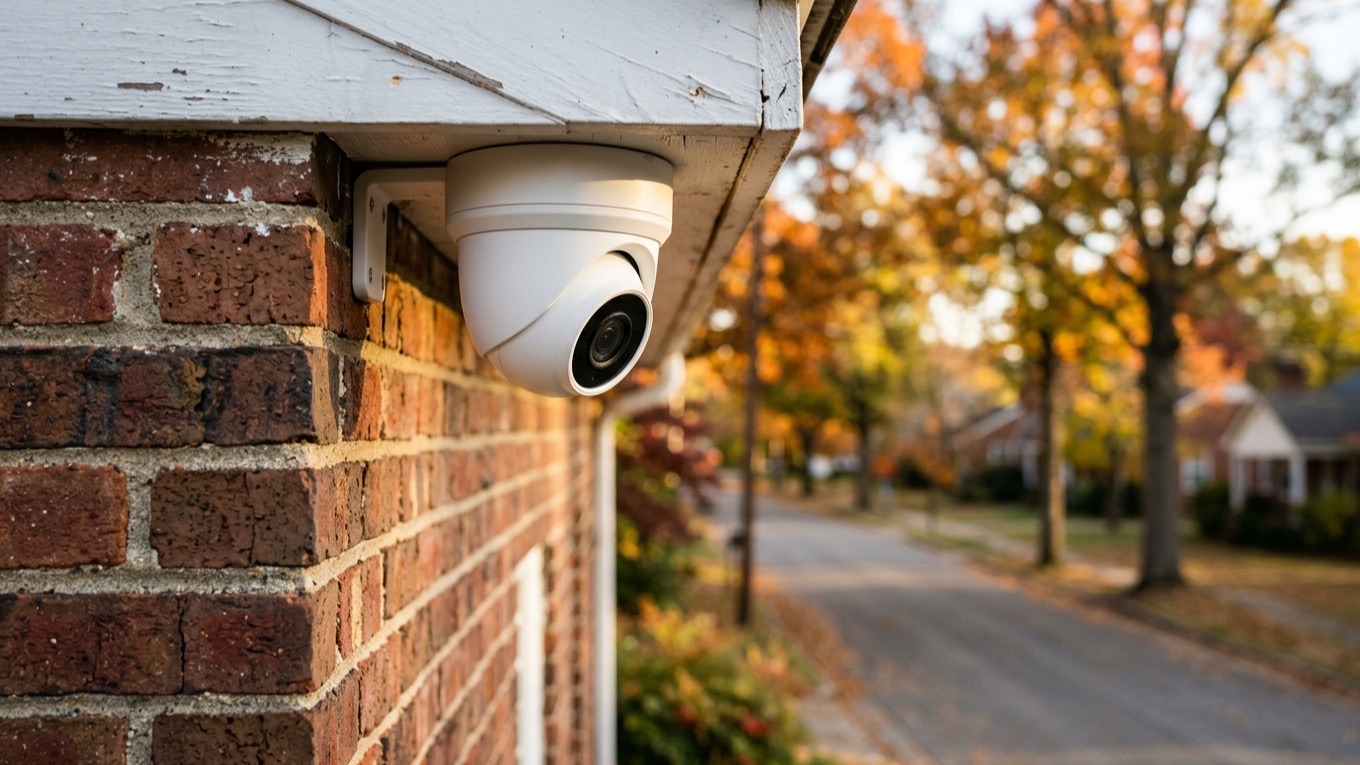
Tell police or your attorney about businesses, homes, buses, delivery vehicles, parking facilities, or dashcams that may have captured the area. Include the camera’s location, direction, and approximate time window.
A nearby business may be willing to preserve footage. You can politely ask who handles recordings and whether they can retain the relevant period for police or your attorney. Don’t claim authority you don’t have, demand access to private systems, or trespass to inspect a camera.
If you already have a video, keep the original file and a backup. Record where it came from and when you received it. A short phone recording of a monitor may lose detail that exists in the original export. Don’t overwrite the original with a cropped, slowed, or enhanced version.
Does a traffic camera mean footage is available?
No. A visible camera doesn’t tell you whether it recorded, which direction it faced, or whether a recording is still available. Different systems serve different purposes.
TDOT describes SmartWay cameras as tools for live traffic monitoring and incident management. Don’t assume that a live road view means TDOT has an archive of your crash. Have the availability of evidence checked with the actual operator.
The same caution applies to private cameras. There is no universal retention period. A prompt preservation request gives the owner a chance to retain relevant material if it exists; it doesn’t guarantee that the camera captured anything useful.
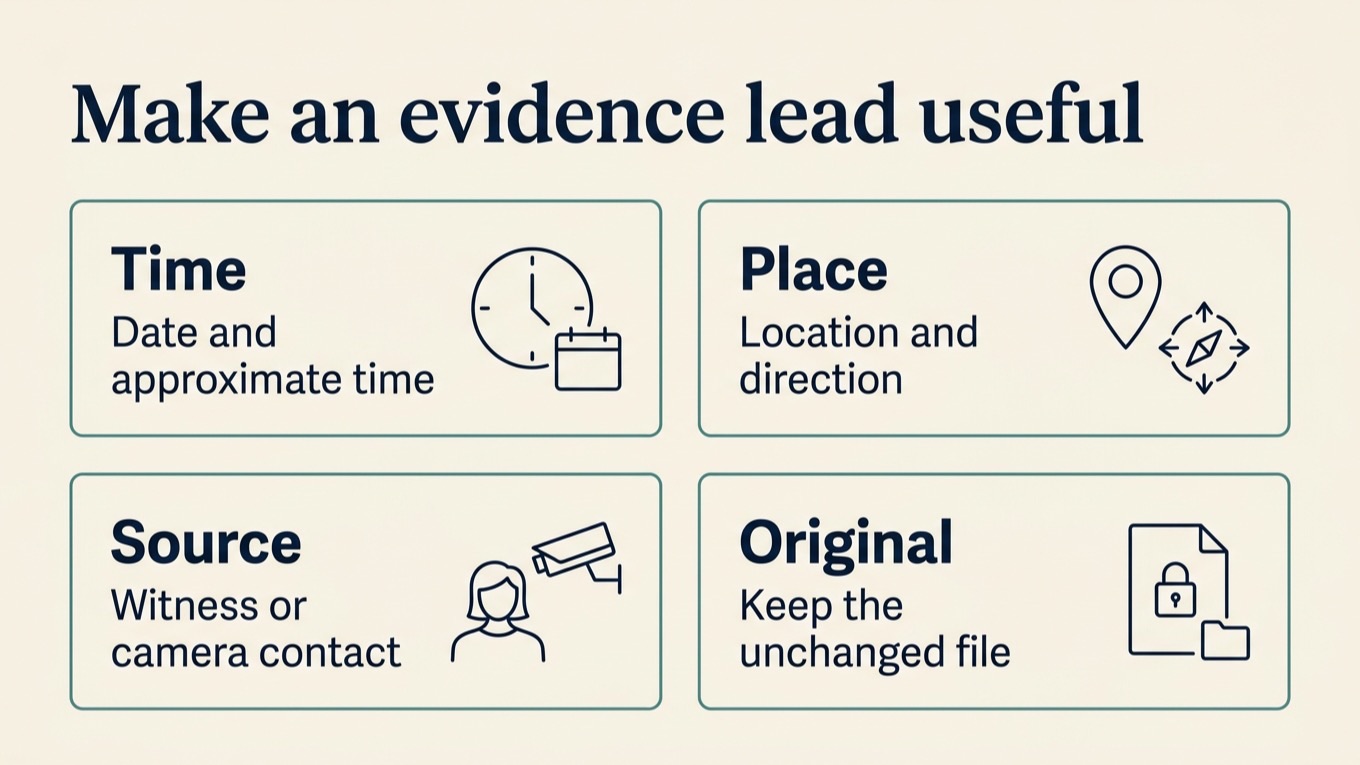
Give each lead enough context to follow
Instead of sending many disconnected messages, organize the facts in a short record:
| Detail | What to include |
|---|---|
| Time | Crash date, approximate time, and whether the time came from memory or a device |
| Place | Intersection, street number, lane, travel direction, or nearby landmark |
| Source | Witness contact, camera owner, device, or person who gave you the file |
| Original | Where the unchanged photograph, video, or document is stored |
For example, “The store on the northwest corner has a camera facing the road; the crash was around 6:10 p.m.” gives an investigator somewhere to start. “There are cameras everywhere” doesn’t identify a particular source.
Share suspected matches privately with police or your attorney. Avoid publicly naming an owner as the driver based on a similar car or a partial plate. A wrong identification can harm someone and complicate the investigation.
What can the crash report tell you?
The report can help identify the agency, recorded parties and witnesses, scene information, and the officer’s observations. It may not contain every later lead or answer every fault question.
Tennessee’s crash-report instructions explain how to request a report and what identifying information you may need. Nashville also directs people to the state system through its online crash-report page.
Review names, dates, vehicle details, and the account of events. If you find a factual error, ask the investigating agency about its correction or supplemental-report process. Keep your copy and supporting records. Don’t edit the official document yourself.
Keep the investigation and insurance claim moving separately
Police investigate possible offenses. An injury claim addresses responsibility, losses, and available coverage. One process doesn’t automatically complete the other, and an arrest isn’t a promise of compensation.
Notify your insurer promptly and keep it informed of new facts. If the driver remains unknown, Tennessee’s UM rules include special proof requirements. In a no-contact crash, evidence from a source other than occupants of the insured vehicle can be particularly important. The federal court’s discussion of Tennessee’s unknown-motorist requirements shows why this issue needs careful review.
Don’t wait for the police file to close before asking about legal deadlines. An attorney can evaluate the civil claim while investigators continue their work.
Get help preserving what matters
Our Tennessee car accident attorneys can help identify potential evidence and review insurance options after an injury crash. Bring what you have, even if it is only a report number, a few photos, and a witness’s contact information.
Call 615-244-2111 or reach out through our online contact form.
Because we care,
Stillman & Friedland