
After a hit-and-run in Tennessee, get to safety, call for help, and report what happened. Don’t chase the other driver. Save the details you remember and notify your insurer promptly, even if police haven’t identified anyone. You may have insurance options, but a hit-and-run claim isn’t automatic.
It’s hard to think about paperwork when the person who hit you has driven away. You may have only a partial plate number, a damaged car, and no idea who will pay for treatment. Start with the steps you can take safely. A family member can help collect information while you get care.
At the scene: Put safety before evidence
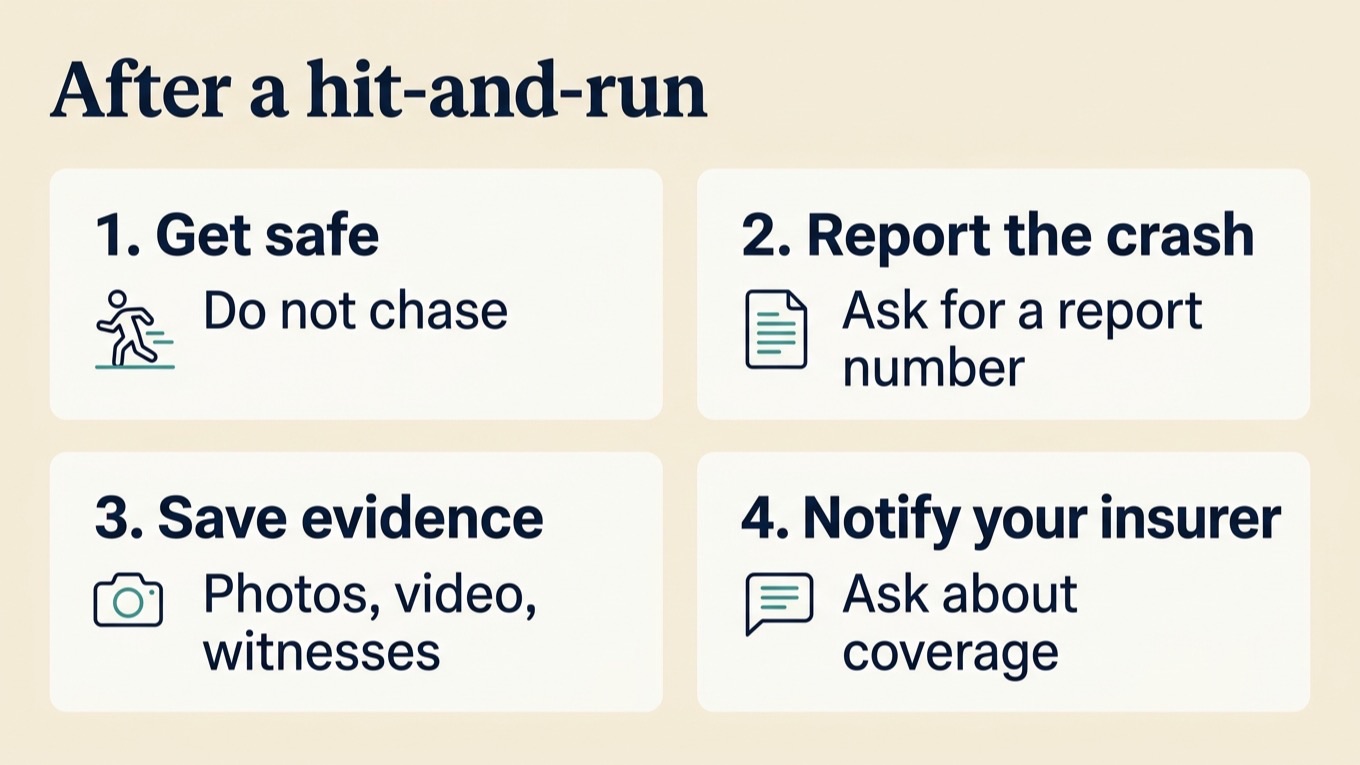
Call 911 if anyone is hurt, there is an immediate danger, or emergency help is needed. Tell the dispatcher your location, direction of travel, nearby exit or intersection, and that the other driver left. Follow the dispatcher’s directions about moving yourself or your vehicle.
Don’t follow the fleeing car or step into traffic to photograph debris. Your safety matters more than a better picture. If you need urgent medical care, let someone else handle the photographs and claim calls.
If you can do so safely, write down:
- The time, road, nearest cross street, and direction each vehicle traveled.
- The vehicle’s color, approximate type, distinctive damage, and any plate characters you actually saw.
- What happened before the impact and which part of your car was struck.
- Names and contact details for people who saw the crash.
- Nearby businesses, homes, or parked vehicles that might have cameras.
Keep uncertain details uncertain. A partial plate is useful; adding guessed characters can send an investigation in the wrong direction. Ask witnesses for their own account rather than telling them what to say.
Before you leave: Keep a record of the scene
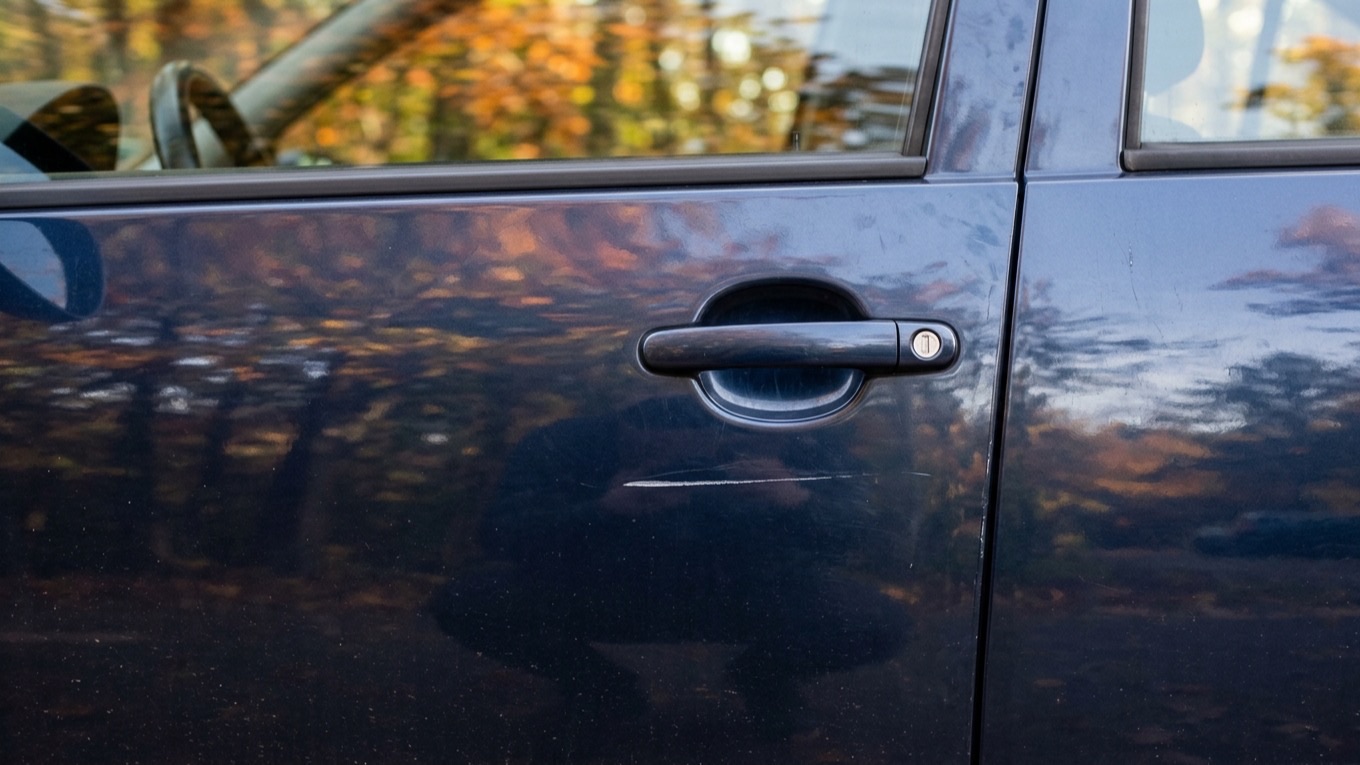
Photograph your vehicle’s damage, the surrounding road, signs, lane markings, and debris from a safe place. Take a wider view as well as close-ups. Save the original files, including the date and time information, instead of keeping only images shared through a messaging app.
If you have a dashcam, preserve the original recording before normal recording overwrites it. Don’t edit the only copy. Make a backup and keep the device or memory card available if your attorney or investigator needs it.
Ask the responding officer for the agency name and incident or report number. If no officer comes to the scene, ask the appropriate agency how to make the report. Explain any delay honestly, including emergency treatment that prevented you from reporting sooner.
The same day: Notify your insurer without waiting for an arrest
Tell your insurer that you were involved in a hit-and-run and ask which coverages may apply. Get a claim number, the adjuster’s contact information, and written instructions for sending documents.
Ask about uninsured motorist coverage for injuries and any separate coverage for vehicle damage. Collision coverage may also be relevant if you bought it. A policy described as “full coverage” doesn’t answer these questions; the actual policy does.
Give accurate information and comply with your policy’s notice and cooperation duties. If you don’t understand a request for a recorded statement or authorization, ask what is required and have an attorney review it promptly. Don’t ignore a request while trying to avoid saying the wrong thing.
Keep a simple call log with the date, person, request, and next step. Our guide to filing a Tennessee UM/UIM claim explains how to organize the insurance side.
Can uninsured motorist coverage help if the driver is never found?
Possibly, if you are covered and the claim meets Tennessee’s requirements. Under Tenn. Code Ann. § 56-7-1201(e), an unknown-driver claim requires physical contact or clear and convincing evidence of the unknown motorist from a source other than occupants of the insured vehicle. It also requires a report to the appropriate law enforcement agency within a reasonable time and reasonable efforts to determine the other vehicle’s and driver’s identity.
This matters if a car forces you off the road without touching you. Your account and your passenger’s account alone may not satisfy the special evidence rule. Tell an attorney promptly about independent witnesses, recordings, and other possible evidence. Don’t assume that any single video or photograph will establish coverage.
Reasonable identification efforts don’t mean chasing a car or confronting a suspected driver. Preserve what you safely can and work with police and your attorney.
Is the police report the only report you need?
Not always. Tennessee’s Owner Operator Report guidance says a separate report is required for an owner or driver involved in a crash causing injury or death, or exceeding the applicable property-damage threshold. When required, it is due within 20 days, regardless of fault, in addition to the officer’s report. Someone may file it on your behalf.
Use the state’s current instructions to check the property-damage thresholds and filing method. Keep confirmation of submission. Reporting to your insurer, reporting to police, and filing this state report are separate tasks.
During the next few days: Protect care and evidence
Follow your treating professional’s advice and keep appointment records, bills, and work restrictions. Tell the provider what happened and describe symptoms accurately. This article can’t assess an injury; seek medical help for symptoms or concerns.
Before repairs or disposal change the vehicle, ask whether an inspection is needed. At the same time, ask about towing and storage charges so the car doesn’t sit without a plan. Keep estimates and receipts.
For video held by someone else, promptly give police or your attorney the location, likely camera view, and relevant time window. There is no single retention period for every business or camera. Our hit-and-run investigation guide explains what information makes a lead useful.
Common questions after a hit-and-run
What if I only discovered damage to my parked car?
Photograph the damage and surroundings, note when you parked and when you found it, and contact the appropriate police agency and your insurer. Ask which vehicle-damage coverage applies. Injury coverage and repair coverage are different questions.
What if police later find the driver?
Give the new information to your insurer and attorney. Finding a driver doesn’t establish that a policy covers the crash or that the available limits are enough. Keep the existing claim file open until you receive clear instructions.
Should I wait for the investigation to finish before calling a lawyer?
No. Evidence can disappear, and insurance and legal deadlines can run while police investigate. Ask about those deadlines early; a claim number doesn’t preserve every right.
Get help with your next step
Our Tennessee car accident attorneys can review the information you have, identify coverage questions, and help you understand what needs attention. Bring the report number, insurance papers, photographs, and any letters you’ve received.
Call 615-244-2111 or reach out through our online contact form.
Because we care,
Stillman & Friedland