
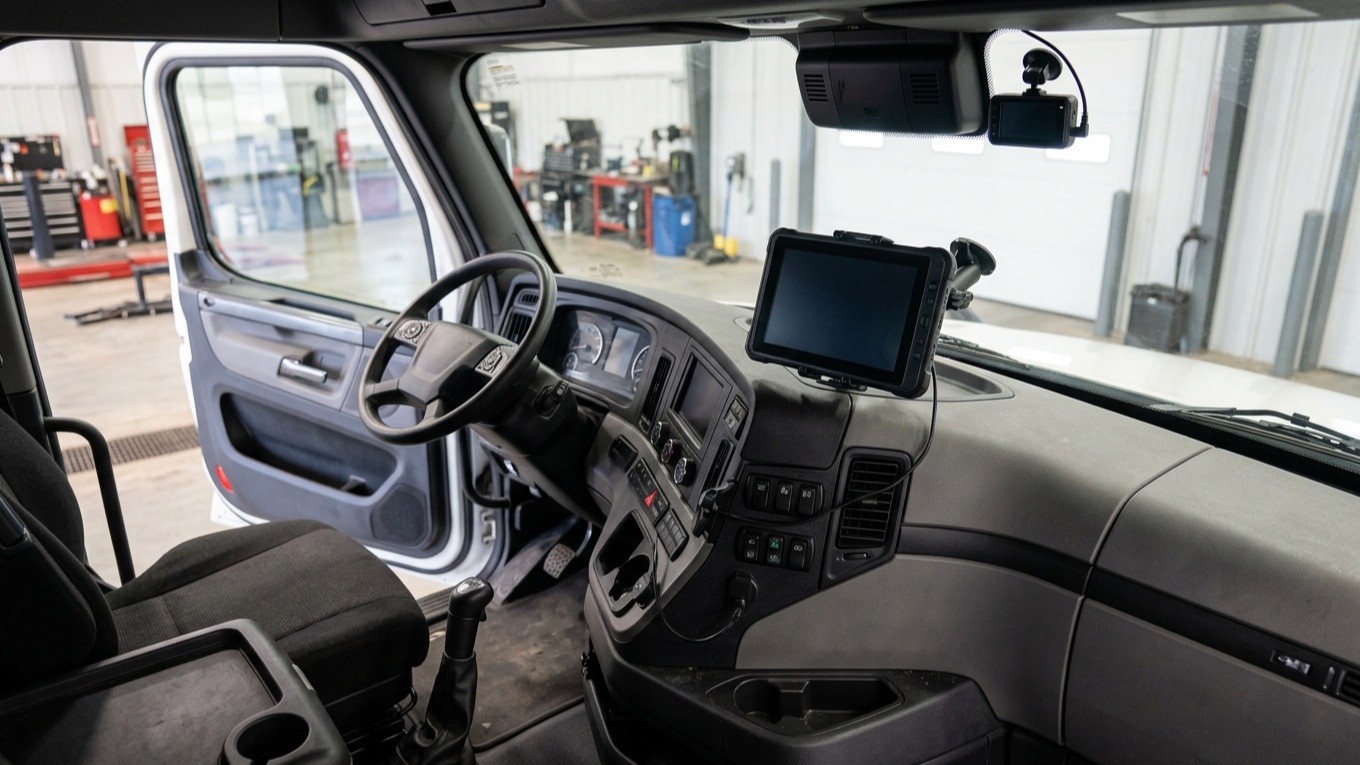

Truck electronic records can help explain a crash, but a “black box” and an electronic driver log are not the same thing. Vehicle modules may record speed or braking around certain events. Driver logs track work and driving time. Cameras and dispatch systems can hold still more evidence. What exists depends on the truck, its equipment, and its settings.
There is no single deadline that guarantees all of this evidence will remain available. Some federal rules set retention periods for particular records. Other information may depend on a device’s storage settings or a business’s practices. Evidence preservation needs attention well before anyone assumes those periods have run.
If you were hurt in a Tennessee truck crash, here’s what those different records can and cannot tell you.
What is a truck’s “black box”?
People use that phrase for several kinds of onboard electronic data. A truck may have an engine control module, often called an ECM, and other systems capable of recording information about vehicle operation or a triggering event.
An NTSB truck-crash investigation describes a module that stored speed, throttle, and brake-status information during certain events. That illustrates what some equipment can provide. It doesn’t establish that every truck records the same fields or captures every collision.
There may be no usable event record. A separate NTSB investigation found that a truck’s relevant recording function was not enabled. The equipment’s capabilities and settings matter as much as the label people give it.
The right question is therefore, “Which systems were installed, and what did they actually save?”
Is an electronic logging device the same as a crash recorder?
No. An electronic logging device, or ELD, primarily supports hours-of-service records. Those records help show when a driver was driving, on duty, off duty, or using a sleeper berth.
The ELD automatic-data rule identifies information recorded at specified events, including time, location, engine hours, and vehicle miles. An ELD record should not be assumed to provide a second-by-second reconstruction of impact.
A commercial system may combine logging with other fleet-management features. That still doesn’t make all its records interchangeable. A preservation request may need to identify the hours logs, vehicle event data, GPS records, video, and messages separately.
Which evidence answers which question?
| Your question | A possible source | Its limit |
|---|---|---|
| Was the truck braking? | Vehicle event data or video | Available fields and recording triggers differ |
| Had the driver exceeded driving limits? | Duty-status logs and supporting records | Exceptions and the full work schedule need review |
| Which vehicle moved into the other lane? | Camera footage, witnesses, and physical evidence | Camera angle, timing, and missing footage can matter |
| Who directed the trip? | Dispatch messages and shipping records | The legal significance depends on the actual relationship |
| Was the truck maintained? | Inspection and repair records | Records need comparison with the truck’s physical condition |
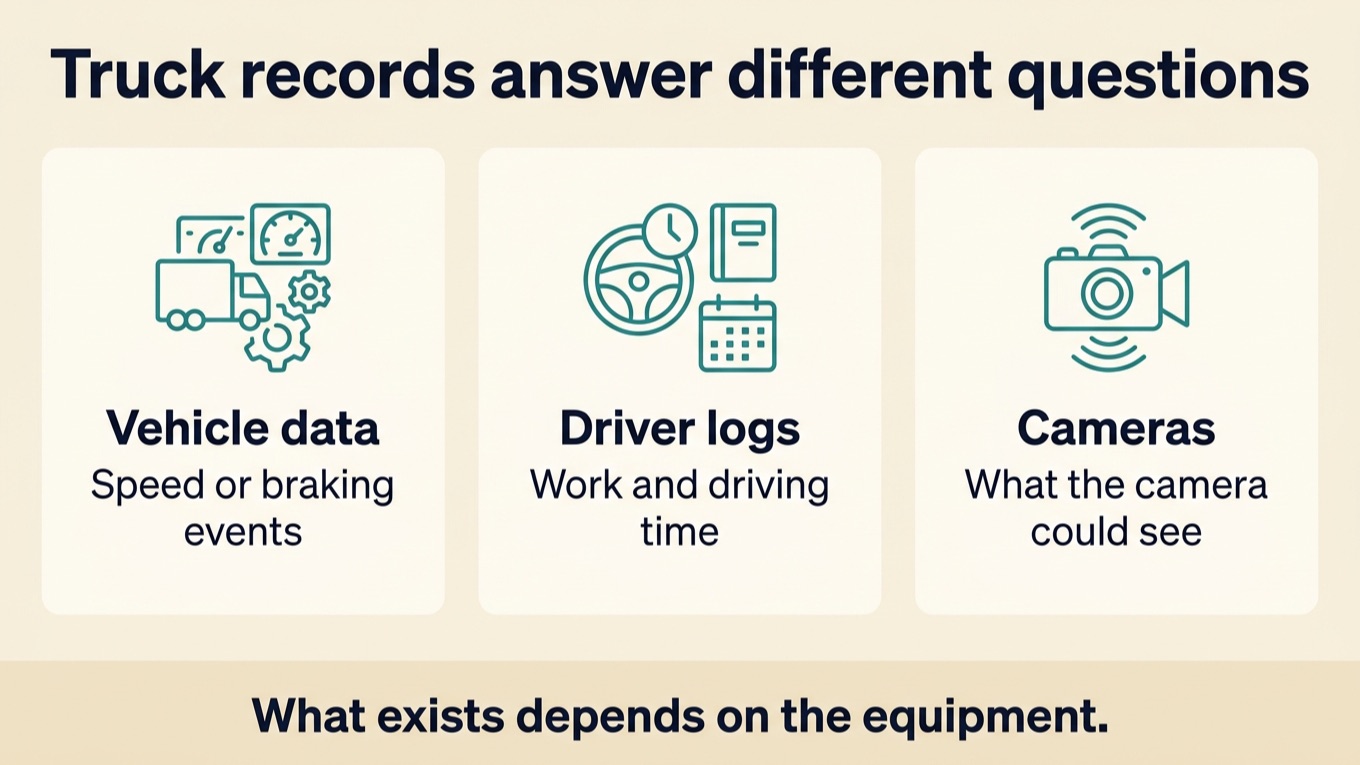
No single source automatically proves a complete claim. An investigator may need to line up timestamps, compare accounts, and explain conflicts between records. That’s especially useful when a driver says the crash happened in a truck’s blind spot.
How long must a trucking company keep driver logs?
FMCSA’s supporting-document guidance says motor carriers must retain records of duty status and supporting documents for six months. That requirement concerns those records. It is not a universal “black box expiration date.”
Other records have different rules. For covered crashes, the accident-register requirement calls for a register covering three years. A register is a record of basic crash information, not a substitute for the original video or electronic data.
Preservation duties connected to anticipated litigation can also matter separately from routine retention requirements. Don’t interpret a retention period as permission to destroy relevant evidence, or as a safe amount of time to wait before requesting help.
Can driver logs prove the truck driver was tired?
Logs can help evaluate the schedule, but they don’t measure a person’s alertness. Investigators may compare them with dispatch messages, receipts, loading records, video, and other information.
For many property-carrying drivers under the standard federal rules, the limits include up to 11 hours of driving after 10 consecutive hours off duty and a 14-hour driving window. Exceptions and other restrictions matter. FMCSA’s hours-of-service summary explains the framework.
Being within the hours limits doesn’t automatically mean a driver was safe to drive. The separate fatigue rule generally prohibits covered driving when illness or fatigue makes it unsafe. A legal review must connect any unsafe conduct to what happened in the crash.
Can you download the truck’s data yourself?
Don’t enter someone else’s truck, connect a device to it, or try to remove a module. Identifying, accessing, and interpreting the data may require permission or legal process and a qualified specialist.
The examination itself should preserve evidence. An expert may need to document the vehicle’s condition, identify equipment, and use a method appropriate to that system. The original data and the circumstances of collection can matter later if the interpretation is disputed.
Our guide to how an attorney investigates an injury case explains how this work fits into the broader claim. An attorney can also consider who holds copies away from the truck. A carrier, camera vendor, telematics provider, or another business may hold separate records. Access is not automatic just because a crash occurred.
What does an evidence-preservation request do?
A focused request identifies the collision and the relevant evidence that should be retained. Depending on the case, it may address the truck and trailer, electronic modules, footage, duty logs, dispatch communications, maintenance records, and shipping documents.
Sending a request is one step. It is not proof that every recipient preserved every item. An attorney may need to follow up, arrange an inspection, or seek appropriate court relief.
Preservation and production are also different. Preserving information keeps it available. Producing it gives someone access under an agreement or applicable legal procedure. A company may preserve a file without immediately handing it over to an injured person.
What if records have already disappeared?
Missing evidence doesn’t automatically mean misconduct, and it doesn’t automatically end the case. Other sources may help explain the collision.
A witness’s dashcam, a nearby business camera, your vehicle’s data, dispatch records, or physical damage may provide information the truck’s system did not preserve. Document what is missing, who held it, and what is known about when and how it was lost.
Tennessee’s Supreme Court addressed lost evidence in Tatham v. Bridgestone Americas Holding, Inc.. The decision illustrates why consequences require a fact-specific legal review. A missing record does not automatically produce a favorable ruling for either side.
What can you preserve today?
Save your original photos and videos, witness contact details, the report number, and any photographs of truck identifiers. Keep messages and letters from insurers. If you have dashcam footage, protect the original file and make a backup before routine recording replaces it.
Tell an attorney where your vehicle is stored and whether repairs or salvage are planned. Don’t alter or discard potentially relevant parts or records, including information you think may hurt your position. Explain any storage fees or time pressure so the next step can be arranged promptly.
Your records matter too. Keep medical and work-loss documents alongside the crash file. Electronic evidence can help explain the collision; it doesn’t replace documentation of how you were hurt.
Get help identifying the evidence that matters
Our Tennessee truck accident attorneys can help review what records may exist after a Tennessee truck crash and what needs attention before vehicles, devices, or files change hands.
Call 615-244-2111 or reach out through our online contact form.
Because we care,
Stillman & Friedland